Personal Notes
My French Study Record
“Coup de grâce”, c’est magnifique, non ?
2026-05-05
Intention
To speak fluent French has always been one of my dreams.
For me, gaining more skills is never enough, and being bilingual is not enough either. I would love to become multilingual and make French one of my professional strengths within the next 5 to 10 years.
Both travelling to Canada and possibly living there are part of my motivation to learn the language.
I will also try to write down what I learn from others in French, including vocabulary, expressions, and grammar, as part of my learning journey.
Vas-y!
Salutations (7th May, 2026)
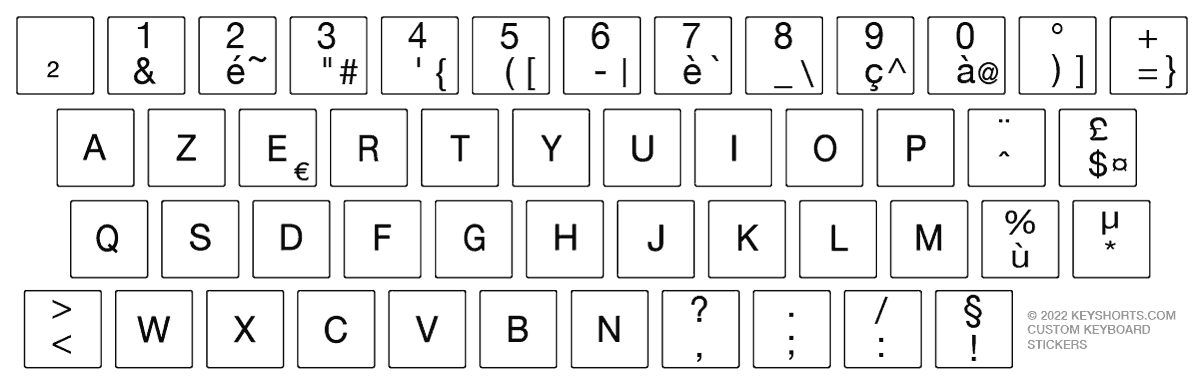
I am trying to get used to the French keyboard, it is annoying for sure.
A Z and Q S
M is , and ?
For copy:
à / â / æ / ç / é / è / ê / ë / î / ï / ô / œ / ù / û / ü / ÿ
À /  / Æ / Ç / É / È / Ê / Ë / Î / Ï / Ô / Œ / Ù / Û / Ü / Ÿ
Boujour, je m'appelle Krist, et je tape en français avec VSCODE. Enchanté!
Hi, my name is Krist, I tape in French with VSCODE, nice to meet you!
What's your name?
-
-Comment tu t’appelles? / Comment vous appelez-vous?(What's your name?)
-
-Je suis Krist. / Mon nom est Krist.
How are you?
-
-Comment ça va? / Comment allez-vous? / Comment vas-tu? (How are you?)
-
-Ça va bien. (Good)
-
-Ça va pas mal. (Not too bad)
-
-Ça va mal. (Bad)
-
-Ça va comme ci comme ça. (so so)
-
-Ça va. (The most regular answer)
Courtesy
Welcome. -> Bienvenue.
Please. -> S'il vous / te plaît.
Thanks. -> Mercy.
You're welcome. -> De rien.
Excuse me. -> Excusez-moi. -> Excuse-moi.
Pardon me. -> Pardonnz-moi. -> Pardonne-moi.
Say Goodbye
Goodbye. -> Au revoir. -> Salut.
Good night. -> Bonne nuit.
Good evening. -> Bonsoir.
Have a nice day. -> Bonne journée.
Have a nice evening. -> Bonne soirée.
See you soon. -> À bientôt.
See you shortly. -> À tout à l'heure.
Count (9th May, 2026)
un, deux, trois, quatre, cinq, six, sept, huit, neuf, dix.
onze, douze, treize, quatorze, quinze, seize.
dix-sept, dix-huit, dix-neuf, vingt.
Fun fact: They use vigesimal system.
Days of weeks
lundi, mardi, mercredi, jeudi, vendredi, samedi, dimanche.
Mon jour préféré est samidi.
Months (11th May, 2026)
janvier, février, mars, avril, mai, juin, juillet, août, septembre, octobre, novembre, décembre.
Mon mois préféré est mars.
Jour(Day) / Mois(Month)
The definite articles: (14th May, 2026)
Le: masculine
Le cinéma - the cinema
Le sac - the bag
Le stylo - the pen
Le chocolat - the chocolate
Le ballon - the ballon
Le tableau - the painting
Le livre - the book
Le téléphone - the telephone
Le verre - the glass
Le garçon - the boy
La: feminine
La tomate - the tomato
La chaise - the chair
La voiture - the car
La cassette - the cassette
La carotte - the carrot
La banane - the banana
La télévision - the television
La fille - the girl
La femme - the woman
Les: plural
Les ballons - the ballons
L': begin with a "h" or "vowel"
L'arbre - the tree
L' hôpital - the hospital
L' homme - the man
Examples:
Le chat - La chatte (cat)
L'angleterre (English)
La france (France)
La belgique (Belgium)
Le japon (Japan)
Le portugal (Portugal)
Pronounciation rules:
End with d、t、s、x、p, usually silent.
The indefinite articles: (15th May, 2026)
Un: plus masculine nouns
Un éléphant (An elephant)
Un train (A train)
Un car (A coach)
Un choariot (A trolley)
Un robinet (A tap)
Un livre (A book)
Un ordinateur (A computer)
Un crayon (A crayon)
Un pain (A bread)
Un sofa (A sofa)
Un parapluie (An umbrella)
Un banc (A bench)
Un vélo (A bike)
Une: plus feminine nouns
Une table (A table)
Une carotte (A carrote)
Une lampe (A lamp)
Une flûte (A recorder)
Une caméra (A camera)
Une télévision (A television)
Une fleur (A flower)
Une photo/photographie (A photo)
Une feuille (A leaf)
Une araignée (A spider)
Une orange (An orange)
Une balle (An ball)
Des: plus plural nouns
Des pommes (Apples)
Des éléphants (Elephants)
Des train (Trains)
Des chariots (Trolleys)
Des parapluies (Umberellas)
Des bancs (Benches)
Des vélos (bikes)
Des balles (balls)
Subject pronouns:
Singular: Je, Tu, Il, Elle, On.
Plural: Nous, Vous, Ils, Elles.
Particularly, use Ils to refer to people mixed with males and females.
e.g. Les livres sont bien. -> Ils sont bien.
Grammars in present sense: (Important)
1. Avoir (to have)
J'ai (I have)
Tu as (You have)
Il a (He has)
Elle a (She has)
On a (We have)
Nous avons (We have) - ATTENTION: Liaison
Vous avez (You have) - ATTENTION: Liaison
Ils ont (They have - masculine)
Elles ont (They have - feminine)
e.g.1: J'ai un chat. (I have a cat.)
e.g.2: Nous avons trois sœur. (We have three sisters.)
e.g.3: Il a un petit chien. (He has a little dog.)
e.g.4: Nous avons une voiture verte. (We have a green car.)
NOTES: e.g.3 and e.g.4
In French, most adjectives come after the noun, but a small group of common adjectives (Beauty/Age/Goodness/Size) come before the noun.
Petit (“small”) belongs to this group.
2. Être (to be)
Je suis (I am)
Tu es (You are)
Il est (He is)
Elle est (She is)
On est (We are)
Nous sommes (We are)
Vous êtes (You are)
Ils sont (They are - masculine)
Elles sont (They are - feminine)
e.g.1: Nous sommes contents. (We are happy.)
e.g.2: Il est content parce qu'il a un nouveau stylo. (He is happy because he has a new pen.)
NOTES:
e.g.1
Adjective word "content" also can be "feminine" or "masculine".
e.g.2
Parce que (Because) needs to be written as " Parce qu' " if it follows with a vowel.
3. Aller (to go)
Je vais (I go / I am going)
Tu vais (You go / You are going )
Il va (He goes / He is going )
Elle va (She goes / She is going )
On va (We go / We are going )
Nous allons (We go / We are going )
Vous allez (You go / You are going )
Ils vont (He goes / He is going )
Elles vont (She goes / She is going )
4. Prepositions (to the)
à la + feminine
à l' + "h" or vowel
au + masculine
aux + plural
chez + the home/place of a person
e.g.1: Je vais à la mairie. (I go to the townhall.)
e.g.2: Je vais à la boulangerie. (I go to the bakery.)
e.g.3: Je vais à la piscine. (I go to the swimming pool.)
e.g.4: Je vais à la bibliothèque. (I go to the library.)
e.g.5: Je vais à la banque. (I go to the bank.)
e.g.6: Nous allons à l'eglise (We go to the church.)
e.g.7: Nous allons à l'hôpital. (We to the hospital.)
e.g.8: Je vais au thêatre. (theatre.)
e.g.9: Je vais au restaurant. (restaurant.)
e.g.10: Je vais au concert. (concert.)
e.g.11: Je vais au magasin. (shop.)
e.g.12: Je vais au spectacle. (show.)
e.g.13: Je vais au supermarché. (supermarket.)
e.g.14: Je vais aux États-Unis. (United States.)
e.g.15: Je vais aux toilettes. (toilet.)
e.g.16: Ils vont chez ma tante. (my aunt's house.)
e.g.17: Ils vont chez toi. (my house.)
e.g.18: Ils vont chez le dentiste. (dentist.)
e.g.19: Ils vont chez le docteur. (doctor.)
e.g.20: Je vais chez le coiffeur. (hairdresser.)